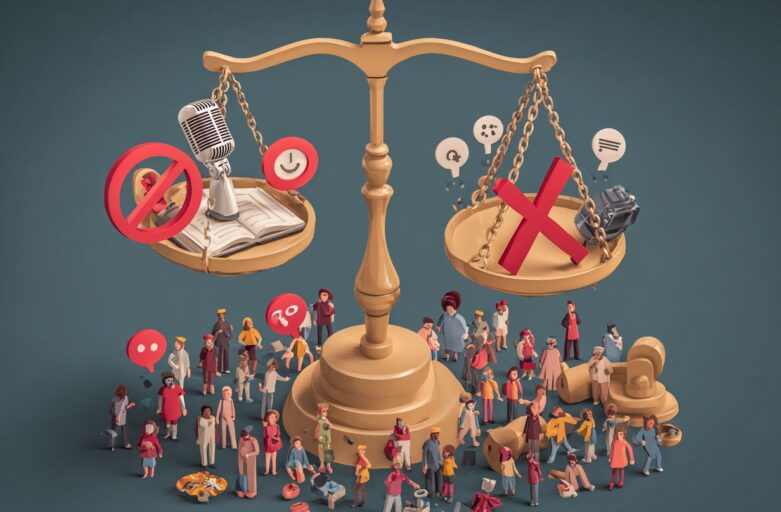
We all cherish the ability to speak our minds, but what happens when that freedom clashes with the harmful words that can tear communities apart? As I dive into the tug-of-war between hate speech laws and our fundamental right to free expression, I’ll explore key definitions, historical perspectives, and the legal frameworks shaping this heated debate. Join me as we navigate the delicate balance between protecting vulnerable groups, preserving our cherished freedom to speak out, and considering the ethical frameworks that guide this discourse.
Definitions and Key Concepts in Speech Regulation
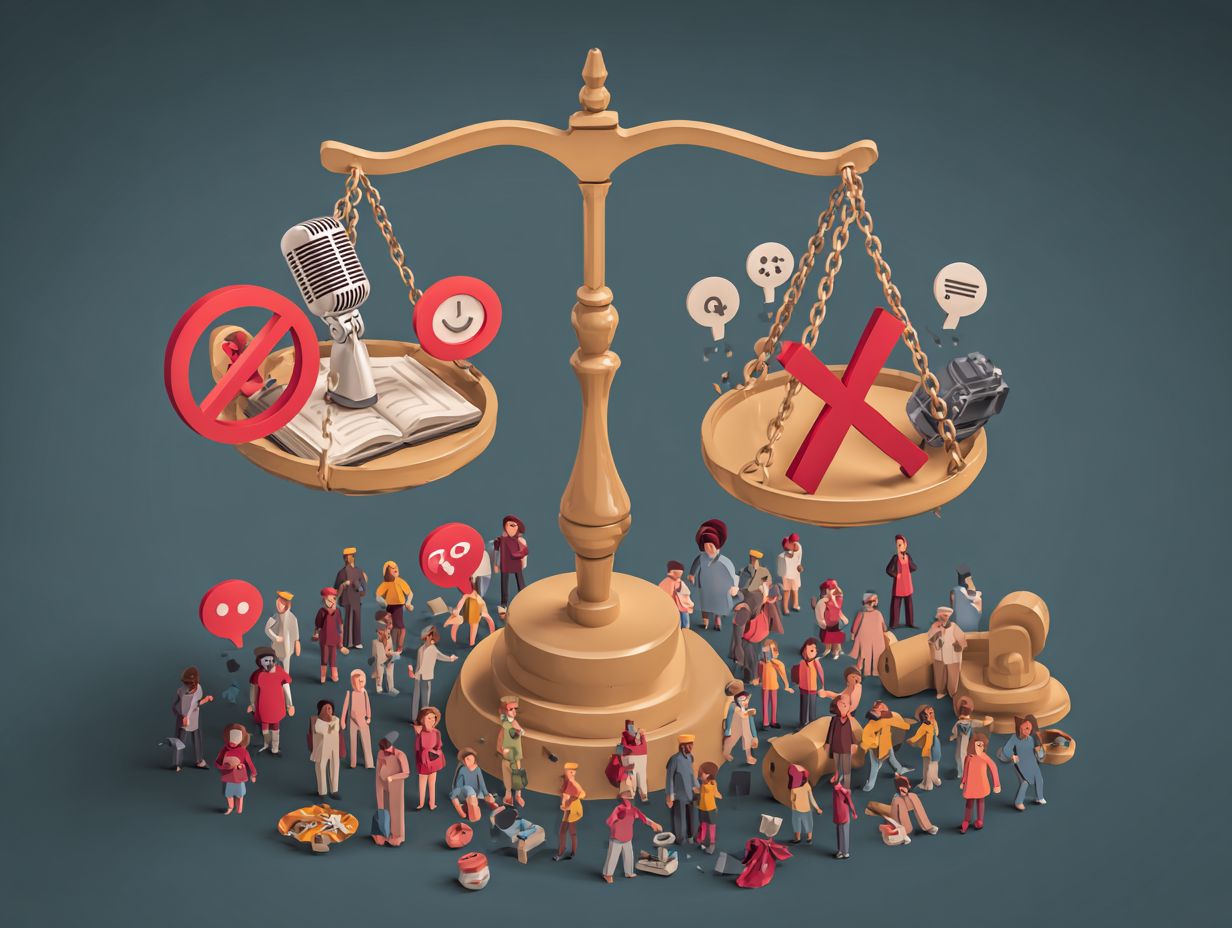
Hate speech is basically any way of communicating that puts down, harasses, or discriminates against people based on things like race, religion, or gender. On the flip side, free speech is all about the right to express opinions without being censored, reflecting a crucial aspect of civil liberties.
The First Amendment of the U.S. Constitution really shows how free speech is protected, establishing important constitutional rights, letting people share their opinions-even the unpopular ones. But it’s worth noting that this protection isn’t all-encompassing. For instance, things like inciting violence or making true threats can be restricted without a problem.
There’s this 2021 survey by the Pew Research Center that found 64% of Americans think hate speech should be legally restricted in line with public safety and societal norms. That really highlights the tricky balance between keeping free expression alive and preventing harm. As we navigate these issues, I believe open dialogue, discourse analysis, and understanding are super important for figuring out where we draw the line on acceptable speech.
Historical Context of Free Speech
When I dive into the historical context of free speech, it’s fascinating to see how societies have wrestled with the balance between expression, legal consequences, and restrictions.
Take the landmark case Schenck v. United States from 1919, for example-it introduced the ‘clear and present danger’ test, which was a big deal at the time. Then came Brandenburg v. Ohio in 1969, which really fine-tuned that standard, making it clear that speech advocating illegal conduct is protected unless it incites immediate lawless action.
Looking at things globally, the perspectives on free speech can vary a lot. The European Court of Human Rights, for instance, tends to take a broader view, often leaning toward protecting individual expression unless there’s a pressing state interest at stake. This nuanced approach shapes legislation and activism in various countries, sparking ongoing debates about the limits of speech-especially when it comes to hate speech, political dissent, and public safety, considering contexts of speech and intent.
It’s a complex and ever-evolving conversation that really keeps things interesting.
The Legal Framework of Hate Speech Laws
I’ve noticed that hate speech laws, reflecting legal frameworks and judicial interpretations, can really differ depending on where you are. Each place seems to have its own take on the balance between free expression and keeping society safe, which reflects their unique cultural values and legal interpretations.
Overview of Hate Speech Laws Worldwide
Countries like Germany and Canada have some pretty strict hate speech laws and anti-discrimination laws that focus on protecting society, while the United States takes a more relaxed stance thanks to the First Amendment.
In Germany, the law is pretty clear: hate speech is a no-go, and offenders can face penalties like fines or even jail time.
Canada has a more balanced approach, allowing some restrictions while still protecting freedom of expression. That means the courts often interpret these laws in ways that can change over time.
On the flip side, the legal system in the U.S. really emphasizes free speech, which makes it pretty rare to see anyone prosecuted for hate speech.
It’s fascinating how societal norms play into all this. Countries with a history of extremism tend to have stricter regulations, whereas nations that prioritize individual freedom are more likely to allow a wider range of expression.
Case Studies: Notable Legal Precedents
Notable cases like R.A.V. v. City of St. Paul (1992) and Brandenburg v. Ohio (1969) really showcase the ongoing tug-of-war between protecting free speech and dealing with hate speech.
In R.A.V., the Supreme Court made it clear that the government can’t just ban speech based on its content, even if it’s offensive. That set a solid precedent for free speech protection.
Then there’s Brandenburg, which introduced a two-pronged test for what speech is permissible. Basically, it says you can only restrict speech if it incites imminent lawless action. The dissenting opinions in both cases raise some interesting concerns about the dangers of unchecked hate speech, pushing for a balanced approach that protects both free expression and societal safety.
When I look at these rulings together, it’s clear how they significantly impact public policy, shaping the laws and regulations around hate speech all across the country.
Impacts of Hate Speech on Society
I’ve seen how the repercussions of hate speech go way beyond just the individual.
It really impacts the communities that are targeted and can slowly chip away at social cohesion.
Effects on Targeted Communities
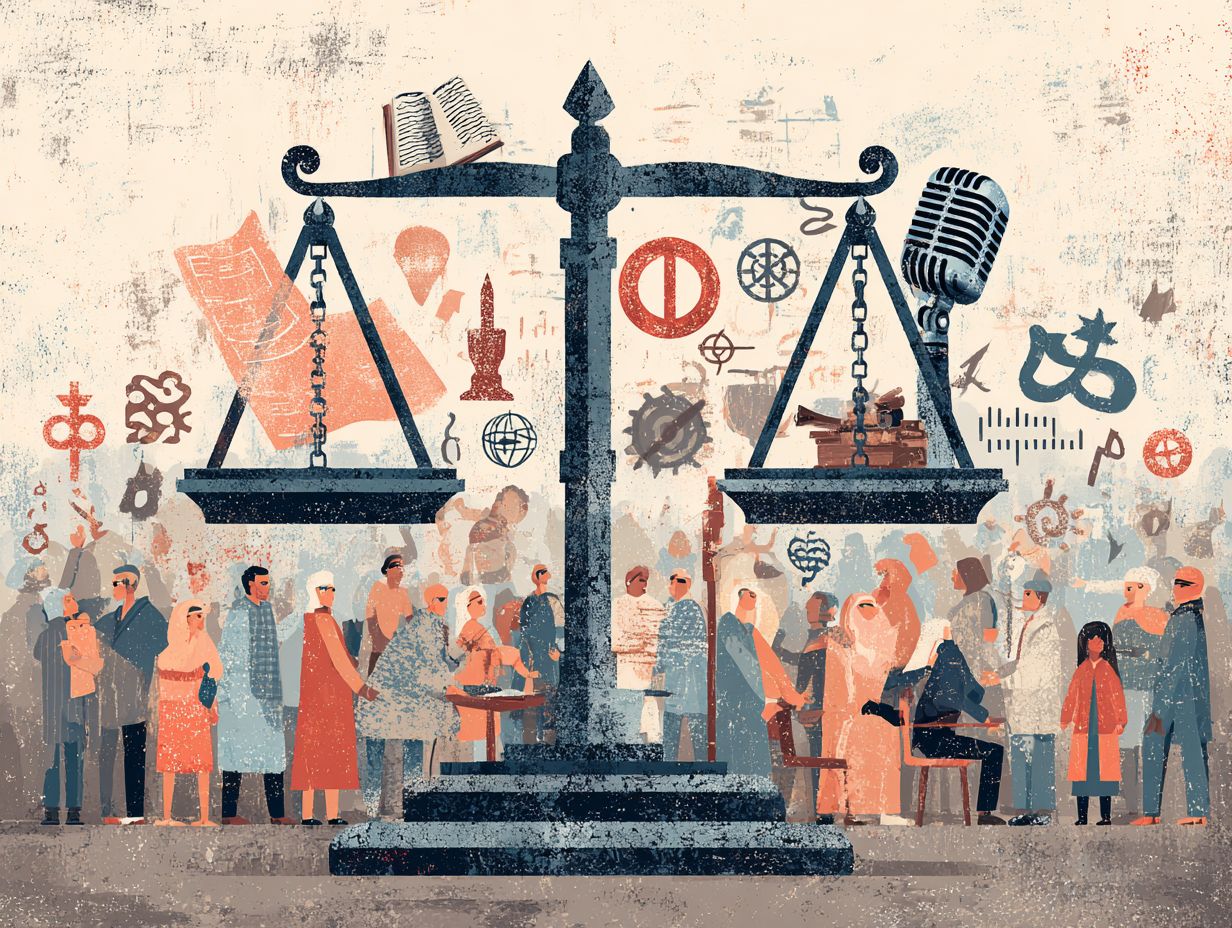
Hate speech really takes a toll on the emotional and psychological well-being of targeted communities. I’ve seen how it can ramp up anxiety, weaken social identity, and create a deep sense of alienation.
Research shows that people exposed to hate speech report anxiety and depression levels that are 25% higher. For example, a 2021 study from the American Psychological Association found that marginalized groups often deal with chronic stress, which can lead to serious long-term health issues.
Hearing personal testimonies makes this impact even clearer; many victims talk about feeling isolated and struggling with their self-worth.
Case studies also highlight how communities that face regular incidents of hate speech have a tough time maintaining social cohesion, which really affects their overall mental health and resilience to face other challenges in society.
Social Cohesion and Division
Hate speech can really tear apart social cohesion, creating division and hostility among different demographic groups. I see this fracture play out in various social movements and riots, where rhetoric aimed at specific groups just ramps up the tensions.
Take the 2020 protests in the United States, for instance. Hate speech directed at minority communities only added fuel to the fire, escalating conflicts between protestors and counter-protestors.
It’s pretty alarming how data shows that communities exposed to hate speech tend to see significant drops in social trust and a rise in polarization.
In diverse neighborhoods, I’ve noticed that bridging programs-like community dialogues or collaborative art projects-can help ease these impacts by promoting understanding and solidarity. Engaging in proactive, respectful conversations is key to restoring a bit of harmony in the community.
Arguments for Restricting Hate Speech
I believe that restricting hate speech is really important. It’s all about protecting vulnerable groups and keeping our society harmonious.
Protection of Vulnerable Groups
I see restricting hate speech as a crucial step in protecting vulnerable communities from discrimination and violence. To tackle this issue, there are several legal and social protections in place.
For example, the Hate Crimes Prevention Act in the U.S. ramps up penalties for crimes that are driven by bias against certain protected groups.
I also appreciate the work done by organizations like the Southern Poverty Law Center, which offers resources and advocacy to fight against hate. A 2021 FBI report caught my attention, showing that hate crimes jumped by nearly 12%, hitting marginalized groups the hardest.
This alarming statistic really highlights the need for stronger community support, civic engagement, and legal measures to deter hate-fueled violence and promote equality. It’s clear that we all have a role to play in creating a safer, more inclusive society.
Prevention of Violence and Discrimination
I’ve come across studies that clearly show a direct link between hate speech and the rise in hate crimes, which really emphasizes the need for solid legal frameworks to prevent violence.
Take Germany, for instance. They’ve put in place strict hate speech laws that come with hefty fines and even prison sentences for those who break them. Their Network Enforcement Act is pretty impressive-it requires social media platforms to remove hate speech within just 24 hours.
On the flip side, Canada’s Bill C-16 has expanded protections against hate speech based on gender identity and expression. These kinds of policies have actually led to a decrease in reported hate crimes, which just goes to show how effective quick legal action can be in curbing violence.
I think it’s important to advocate for similar regulations and legislative measures in other areas to tackle this urgent issue head-on.
Arguments for Protecting Free Speech and Individual Rights
I believe that defenders of free speech make a solid point when they say that limiting expression can set off a slippery slope toward censorship, which really undermines our democratic values.
Importance of Open Discourse
Open discourse is so important to democracy because it lets us share a wide range of ideas and perspectives, even those that might not be popular, enhancing speech diversity. When someone tries to restrict speech, it often leads to a serious backlash.
Take, for instance, the case of a professor getting fired over a controversial opinion on campus; that sparked protests at many universities advocating for free expression.
Then there were the protests in Hong Kong back in 2019, which really arose in response to concerns about free speech, legislative transparency, and the rights and responsibilities associated with speech protections. These events just show how vital open discourse is for democratic engagement.
When people feel like their voices are being silenced, they tend to come together to demand the freedom to express their dissenting views. It’s amazing how such movements can become powerful catalysts for change.
Slippery Slope of Censorship: A Balancing Act
I often find myself thinking about the concern over censorship, the harm principle, and how it usually revolves around that slippery slope argument. You know, where the first little restrictions end up paving the way for much broader limitations on free expression.
There are some pretty vivid historical examples that illustrate this point. Take the 1917 Espionage Act in the United States, for instance. It started off with the goal of limiting dissent during wartime, but it quickly morphed into a tool that suppressed a whole range of political expressions.
Then there’s China’s approach to Internet censorship. It kicked off by blocking a handful of websites, but now it’s turned into this massive, state-controlled information monopoly. It really makes you wonder-if society starts accepting even the tiniest bit of censorship, that gradual acceptance can lead to serious erosion of civil liberties.
Ultimately, that could stifle dissenting voices and diminish the diversity of thought that’s so essential in a democratic society.
Finding a Balance: Possible Solutions for Speech Protections and Limitations
I think finding a balance between regulating hate speech and protecting free speech rights is really important in today’s digital platforms and online platforms.
Conversations can get pretty polarized, and it’s essential to navigate this carefully.
Moderation and Contextual Approaches
I find that using moderation and contextual approaches, including content moderation, really helps me navigate the tricky world of hate speech while still keeping the conversation open. For example, platforms like Facebook have rolled out some pretty advanced moderation tools that use machine learning algorithms to automatically spot hate speech and flag inappropriate content.
I came across some interesting stats-Facebook reported a 35% reduction in hate speech incidents after they integrated their AI-driven moderation system. And then there’s Twitter, which took a multi-tiered approach by mixing automated tools with human reviewers. This combination led to a 20% boost in user engagement in just three months.
These strategies make it possible to intervene quickly while creating a safer online environment, fostering social harmony and encouraging healthier conversations among users.
Education and Awareness Initiatives
I really believe that education and awareness initiatives are crucial for fostering understanding and tolerance, addressing ideological conflicts and divisive rhetoric to help reduce the negative impact of hate speech.
For instance, I think programs like the Anti-Defamation League’s ‘No Place for Hate’ are fantastic because they give the power to schools to create inclusive environments. They offer resources for educators, like lesson plans and community engagement projects, that tackle bias and bullying head-on.
On a similar note, I’ve found that the Southern Poverty Law Center’s ‘Teaching Tolerance’ provides free educational materials that promote social justice, which is so important.
And then there are community-driven programs, like the workshops from the International Institute, that really encourage dialogue among diverse groups and help build understanding.
These initiatives do an amazing job of using educational platforms to create a more tolerant society by equipping people with both knowledge and practical tools for meaningful engagement, promoting social justice and media literacy.
Future Directions for Legislation: Legal Balance and Policy Development
Future legislation, including hate crime legislation, really needs to take into account how social norms are changing and how technology is affecting hate speech and free expression. As online platforms continue to grow, it seems likely that we’ll see more regulatory scrutiny aimed at tackling hate speech.
Just look at the European Union’s Digital Services Act; it’s all about holding platforms accountable for the harmful content they host.
I’ve noticed that experts are predicting that future laws might include clearer definitions of hate speech, addressing the context of speech, which would help tackle the complexities of communication online. With advancements in AI moderation tools, enforcement practices could evolve, striking a balance between protecting free speech and keeping harmful expressions in check.
It’s crucial for all stakeholders to keep the conversation going, ensuring that laws align with our societal values while also protecting individual rights and engaging in speech advocacy.
Role of Society in Upholding Rights: Civic Responsibility and Community Engagement
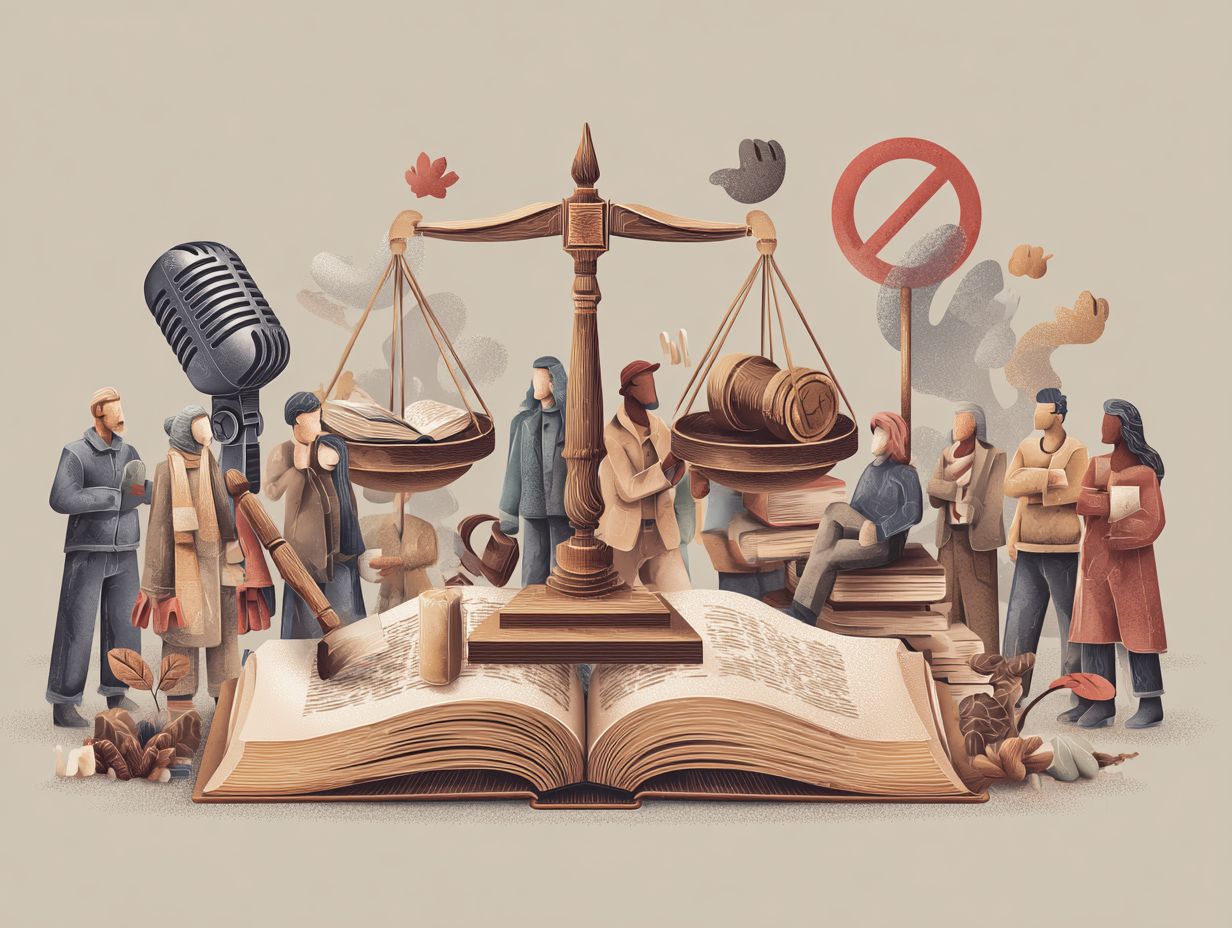
I think society has a crucial role in balancing free speech with protections against hate speech, creating a space where mutual respect and dialogue can thrive. To really promote understanding and respect for everyone’s rights, communities can host forums that encourage open discussions on these important topics.
I like the idea of organizing workshops that emphasize empathy and active listening, and using tools like online surveys to get a sense of how the community feels. Setting up clear guidelines for respectful dialogue can go a long way in fostering constructive exchanges.
It’s also a great idea to encourage local organizations to join in, bringing a diverse range of perspectives to the table. Getting involved in these conversations is vital, so I think about volunteering at local events or joining discussion groups to deepen my understanding and stand up for these essential rights.
Frequently Asked Questions
What is hate speech and why is it a concern? Balancing Act and Stakeholder Engagement
Hate speech is any form of communication that spreads, incites, or promotes hatred, discrimination, or violence towards a particular group or individual based on their race, ethnicity, religion, gender, sexual orientation, or other characteristics, impacting public opinion and cultural sensitivity. It is a concern because it can lead to real-world harm and can threaten the fundamental rights and dignity of individuals and groups.
How does hate speech intersect with the right to freedom of speech?
Hate speech is often seen as a violation of the right to freedom of speech, which is a fundamental human right, and raises conflicts of rights and societal impact. However, this right is not absolute and can be limited in certain circumstances, such as when it infringes on the rights and freedoms of others.
What are hate speech laws and how do they differ from country to country?
Hate speech laws vary from country to country, but they generally refer to laws or regulations that aim to prohibit or punish hate speech, considering jurisdictional challenges and international standards. Some countries have specific laws targeting hate speech, while others may have broader laws that address hate speech as part of their anti-discrimination or hate crime laws.
Why is it important to balance hate speech laws with the right to speak freely?
Balancing hate speech laws with the right to free speech is important because both are fundamental rights that need to be protected. While hate speech laws aim to prevent harm and protect marginalized groups, the right to free speech is essential for open and democratic societies. Striking a balance between the two is necessary to ensure the protection of both rights.
How can we strike a balance between hate speech laws and the right to speak freely?
This is a complex and ongoing debate, but some possible solutions include having clear and specific definitions of what constitutes hate speech, enforcing laws consistently and without bias, promoting education and dialogue to address underlying issues, and encouraging responsible and ethical media coverage.
What are some potential consequences of not balancing hate speech laws with the right to speak freely?
If hate speech laws are too restrictive, it can lead to censorship and the suppression of important discussions and debates, affecting freedom of assembly and divisive rhetoric. On the other hand, if the right to free speech is prioritized above all else, it can allow for the spread of harmful and discriminatory ideas and perpetuate systemic inequalities. Striking a balance is crucial to protecting both rights and fostering a just and inclusive society.
Want to keep exploring the fight for free expression and digital rights? Visit the BertrandPancher.com home page for more in-depth articles, fresh perspectives, and resources on protecting free speech in the modern world.