When I scroll through TikTok, I can’t help but think about how students today are using their voices in ways we never imagined. From campus protests to viral videos, the fight for speech rights has evolved dramatically. It’s crucial to explore the legal landscape that shapes these conversations-from landmark court cases to the untamed nature of social media. Join me as we dive into the complexities of student speech rights, and discover how this digital revolution is redefining activism and youth activism.
Definition and Importance
Student speech rights are all about my ability to express my views freely in school, and they’re protected under the First Amendment. These rights are super important for creating a culture where academic freedom and responsible digital citizenship can thrive, promoting digital citizenship rights and civic responsibilities.
Take, for example, how schools can set up policies that encourage me and my classmates to dive into discussions on controversial topics while making sure everyone’s voice is heard. Educators can help us understand what our online presence means and promote respectful conversations through workshops that focus on digital literacy and ethical considerations.
Plus, establishing platforms like student forums or debate clubs can really boost our respect for differing opinions. It equips us with the skills we need to navigate conversations in today’s digital world and understand the role of digital rights.
Historical Context of Student Speech Rights
I find it fascinating how the evolution of student speech rights in the U.S. has unfolded through a series of landmark cases.
These cases have really shaped what free expression looks like in educational settings, public university, and defined the boundaries for students.
Landmark Cases and Legislation
I find it fascinating how landmark cases like Tinker v. Des Moines (1969) really set the stage for student rights. This case made it clear that students don’t lose their constitutional rights just because they walk into a school.
It highlighted that they have the right to express themselves, as long as their actions don’t disrupt what’s happening in class.
After Tinker, other cases like Hazelwood School District v. Kuhlmeier (1988) came along and fine-tuned those rights, giving schools the power to regulate activities that they sponsor. Then there’s Morse v. Frederick (2007), which upheld restrictions on student speech promoting illegal drug use. That case really showed there are limits to student expression.
All these cases play a part in shaping how we understand student rights today, including digital age considerations, and they’re crucial for figuring out the current policies and the balance between free speech and school authority.
Evolution Over Time
Over the past fifty years, I’ve seen student speech rights evolve quite a bit, shaped by social movements and changing cultural attitudes toward free expression.
Back in the 1970s, landmark cases like Tinker v. Des Moines really paved the way for students’ rights to free speech, setting a precedent for future activism. These days, we’re still grappling with issues like online expression, political expression, and political protests that continue to challenge those rights.
Modern students like me are using social media platforms such as Twitter and Instagram not just to share our opinions but also to organize movements. Of course, there are hurdles we face, like administrative censorship and legal restrictions.
In response, student organizations are stepping up to advocate for clearer policies that protect our rights, making sure that the spirit of free expression stays alive and well on campuses.
Free Speech on Campus
Free speech on campus is a constantly evolving topic for me. I see how university policies are always trying to find that sweet spot between allowing expression and maintaining community standards.
It’s definitely a tricky balance!
Policies and Regulations
I’ve noticed that many universities have these speech codes that regulate expression, all in an effort to create a more inclusive environment while trying to navigate the tricky waters of free speech protections.
These codes usually cover things like hate speech, harassment, and disruptive behavior. For example, a university might ban any speech that threatens violence or encourages discrimination against certain groups.
But here’s the thing: these regulations can lead to legal challenges because students often argue that their First Amendment rights and communication rights are being infringed upon. It’s a fine line for institutions to walk as they try to balance their commitment to inclusivity with the need to follow constitutional protections. This often sparks ongoing debates and leads to constant revisions of their policies.
Challenges Faced by Students
I see that students today face a lot of challenges when it comes to their speech rights, like censorship, backlash over controversial opinions, and pushback from institutions. It’s wild how common these issues are.
Just take a recent university protest against a speaker that turned into a big mess. It really highlighted the clash between free speech, safety, and collective voice in speech forums.
I’ve heard of students getting in trouble for sharing unpopular views on social media, which definitely raises some eyebrows about whether there’s overreach happening with online identity and online reputation. Luckily, there are resources out there for students to help tackle these problems.
For instance, the Foundation for Individual Rights and Expression (FIRE) offers legal support, and there are advocacy groups that encourage dialogue on campus.
I think engaging in open forums can really help foster understanding, build a community, and encourage speech limitations awareness. that respects all kinds of viewpoints. It’s all about finding that balance, right?
The Role of Social Media
I’ve noticed that social media platforms like TikTok have really changed the landscape of youth culture and participatory culture. the game for how students express themselves.
It’s incredible how quickly ideas can spread and how easily they can come together for activism.
Impact of Platforms like TikTok
TikTok has really become a powerful outlet for youth expression, letting me and my fellow students share our perspectives and experiences with a global audience. It’s fascinating how this platform has sparked important conversations in the realm of digital advocacy and virtual activism. on campuses, especially around free speech rights.
For example, when the `Silence is Compliance’ trend went viral, it got many of us advocating for racial and social justice, which even influenced some university policies. Then there’s the `Don’t Say Gay’ hashtag, which mobilized students to challenge some pretty restrictive laws in various states.
These instances show that TikTok doesn’t just give us a voice-it actually encourages community action and pushes institutions to rethink their stances on student expression and rights.
Virality and Student Activism
I’ve noticed that the virality of social media posts can really boost student activism, shining a spotlight on issues like inequality and justice on campuses. Successful movements often make the most of platforms like Twitter and Instagram.
Take the #BlackLivesMatter movement, for example. It gained a lot of momentum on campuses after some powerful viral posts called attention to police brutality.
I find that tools like Canva are super helpful for creating eye-catching graphics or infographics to share on social media-this definitely ramps up engagement. Plus, setting up event pages on Facebook can really rally fellow students for protests or discussions.
By combining high-quality content with smart outreach, student activists can effectively raise awareness and build community support.
Legal Framework Governing Digital Speech
I find the legal framework around student speech in the digital age to be pretty complex.
It’s all about finding that balance between First Amendment rights and privacy concerns, while navigating digital ethics.
First Amendment Considerations
The First Amendment has a big impact on the legal protections for student speech, but how it applies in the digital world is still a hot topic of debate.
I remember reading about landmark cases like Tinker v. Des Moines Independent Community School District from 1969, where the Supreme Court made it clear that students don’t lose their right to free speech just because they’re at school. That case really helped protect non-disruptive expressions of opinion.
Then there’s Morse v. Frederick from 2007, where the Court decided that schools could restrict student speech that promotes illegal activities, like drug use.
These cases show that while students can express themselves online through digital communication, schools still have the right to step in if that speech disrupts the educational environment. So, it’s a good idea for students to be mindful of what they say, especially on digital platforms connected to their schools.
Privacy vs. Free Speech
As I navigate the world of digital communication, I can’t help but notice the tricky balance between privacy rights and free speech that often leads to some complex legal dilemmas. For instance, I’ve seen how these tensions play out in cases involving school disciplinary actions over social media posts.
Take the situation where a student posts a criticism of a teacher online; schools might argue that this kind of speech disrupts the educational environment.
On the flip side, students often claim their right to free expression, referencing cases like Tinker v. Des Moines. It really feels like schools need to step up and create clearer policies that respect both free speech and privacy.
Educating students about their rights and the possible consequences of their online actions seems essential for navigating this complicated landscape.
Case Studies
When I dive into specific case studies of student movements, I really see how dynamic campus speech rights can be and the clever strategies that students use to make their voices heard.
It’s fascinating to explore how they navigate these issues, utilizing digital platforms’ impact, and fight for their rights.
Successful Student Movements and Influencer Culture
I’ve been really inspired by recent student movements, like the March for Our Lives, which show just how powerful collective expression and digital advocacy can be. Student activists have really tapped into social media platforms like Twitter and Instagram to spread their messages and rally support, showcasing social media influence.
Take the March for Our Lives, for example. Followers rallied around hashtags like #NeverAgain to present a united front, and with tools like Canva, they designed some seriously impactful graphics to share. This is a clear example of content creation and audience engagement at work.
Organizing events through platforms like Facebook Events allowed students to mobilize thousands of people in no time. The result? A noticeable boost in youth voter registration, proving that digital engagement, when paired with real-world action, can lead to significant change and further student rights activism.
Controversial Incidents and Speech Regulation
Controversial incidents, like the protests against invited speakers, really shine a light on the ongoing conflicts around free speech on campuses and the nuances of speech regulation. These events often spark strong reactions from both students and administrations.
Take, for example, a speaker who shares polarizing viewpoints; the reactions can be everything from passionate protests to a solid defense of the speaker’s right to share their ideas, highlighting the tension between freedom of expression and content moderation.
This tension really underscores the need for dialogue and nuanced discourse. I think institutions can play a big role by creating open forums where different perspectives can be discussed while still keeping everyone safe.
By learning from these situations, schools can shape future policies that encourage respect for free speech while also prioritizing student well-being. Finding that delicate balance is key to creating a truly inclusive campus environment that supports equity in speech and cultural discourse.
Trends and Predictions in Digital Democracy and Educational Policies
Emerging trends like digital activism and a growing awareness of rights are really going to shape the future of student speech rights. I mean, just think about it-social media has given students a platform to express their opinions more freely than ever. TikTok, for example, has become a go-to space for activism and technoculture.
Universities are catching on and starting to tweak their social media policies to have a better grasp of the First Amendment. This often means they’re putting clearer guidelines in place about what’s considered acceptable speech on campus.
Tools like Social Sentinel are also stepping in to help schools keep an eye on online conversations while still encouraging respectful dialogue, a form of platform accountability. As these trends continue to develop, I can definitely see a more informed generation stepping up to advocate for strong protections of their speech rights and tackle online harassment.
Frequently Asked Questions on Digital Citizenship Education
What are student speech rights in the digital age?
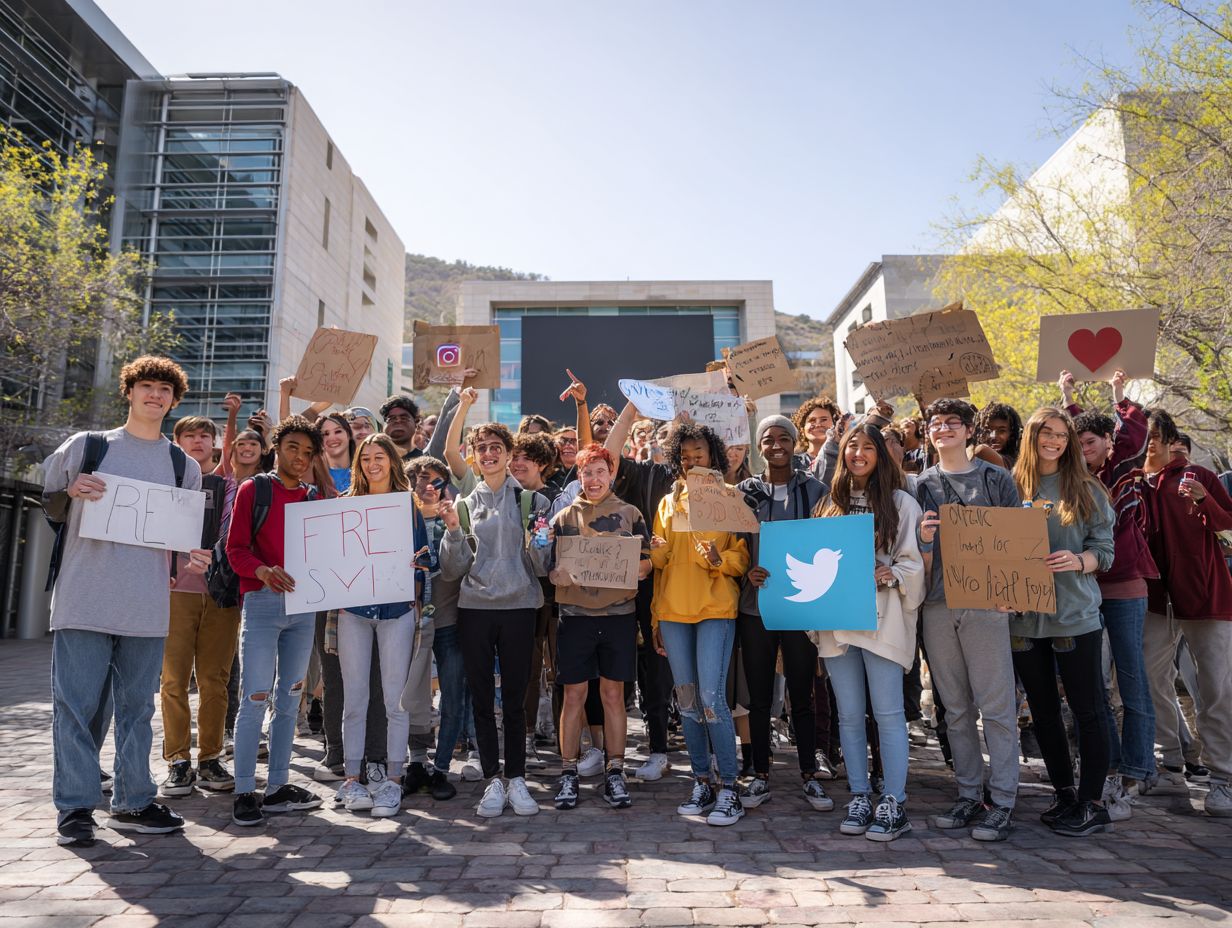
Student speech rights in the digital age refer to the rights and protections that students have when expressing themselves through various forms of digital communication, such as social media platforms, on-campus websites, and online forums. This includes considerations of online privacy and user-generated content.
Do students have the same speech rights online as they do on campus?
Yes, students are generally protected by the First Amendment both on and off campus, including their online speech. However, schools may have some limitations on student speech in certain situations, such as if it causes a significant disruption to the learning environment, highlighting the importance of institutional policies and educational institutions’ role in speech regulation.
How does free speech apply to student use of social media?
Students have the right to express themselves freely on social media platforms, as long as their speech does not violate any school policies or laws. However, schools may have the authority to discipline students for online speech if it causes a substantial disruption or violates the rights of others, raising questions about digital footprints and social responsibility. Thats why some students started their own tok2fans.com accounts and started modeling.
Can schools regulate student speech on TikTok?
Generally, schools cannot regulate student speech on TikTok unless it falls under certain exceptions, such as if it is considered a threat or harassment. However, schools may have the authority to address disruptive behavior or speech that violates school policies, even on TikTok, reflecting the ongoing dialogue between personal expression and expression versus safety.
What should students be aware of when posting on social media?
Students should be aware of potential consequences for their online speech, such as disciplinary action from their school, as well as legal ramifications if their speech is considered defamatory, threatening, or harassment. It is important for students to think carefully before posting anything on social media, understanding the potential legal implications and peer influence it may carry.
Are there any resources for students to learn more about their speech rights in the digital age?
Yes, there are various resources available, including websites and organizations dedicated to protecting student speech rights. Some examples include the Student Press Law Center, the First Amendment Center, and the American Civil Liberties Union (ACLU), which offer insights into speech and technology and digital citizenship education.
Want to keep exploring the fight for free expression and digital rights? Visit the BertrandPancher.com home page for more in-depth articles, fresh perspectives, and resources on protecting free speech in the modern world.