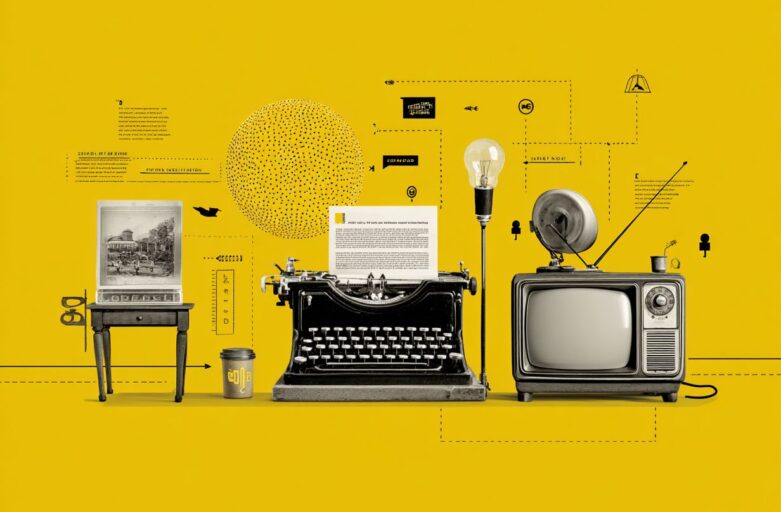
Imagine a world where ideas flowed freely, igniting change and sparking revolutions-sounds exhilarating, right? The journey of free speech has always danced hand-in-hand with technology, from the humble pamphlet to the powerful platforms we use today. As we explore this evolution, we’ll uncover how each leap in technology has shaped public discourse, faced censorship battles, and ignited fresh challenges. Join me in unraveling the intricate tapestry of free speech through the ages, because you won’t want to miss where we’re headed next!
The Importance of Free Speech and Technological Evolution

Free speech is really the backbone of democracy for me; it lets individuals express their ideas, engage in political discourse, and challenge the status quo without worrying about backlash.
This principle feels especially crucial for movements like Black Lives Matter, which cleverly uses social media to amplify voices and get people active.
With hashtags and viral campaigns, folks share their personal stories of systemic injustice, creating a sense of community and building awareness.
Public demonstrations are another powerful way to express dissent, grabbing attention for the issues that matter.
I’ve seen recent protests embody this use of free speech, allowing participants to push for policy changes and demand greater accountability.
So, in my view, free speech is still a vital tool for driving societal change and expressing political opinions today.
Technological Change: A Catalyst for Evolution in Public Discourse
Technological change has always played a huge role in how I communicate, from the printing press all the way to today’s social media platforms, illustrating the evolution of media and speech technology.
I mean, just think about it: the printing press was a game-changer. It made printed materials available to everyone, which really boosted literacy and spread ideas like wildfire. That shift set the stage for later inventions like the telegraph and telephone, which made communication faster and more efficient.
Then there’s the internet and social media-these innovations have completely changed how I interact with others, allowing for instant connections across the globe.
Every time a new technology comes along, it not only makes information more accessible but also shifts how we perceive and share that information. It’s pretty fascinating to see this ongoing evolution in human communication.
The Era of Pamphlets and Their Societal Impact
Pamphleteering was really important for spreading ideas during some key moments in history. It helped shape public opinion and influenced political landscapes in a big way.
Origins of Pamphleteering
Pamphleteering really took off in the 16th century, giving reformers an awesome way to share their ideas far and wide. This movement had a huge impact on the social and political scene, and you can see it clearly in Thomas Paine’s ‘Common Sense’ from 1776.
His pamphlet really nailed the public’s feelings against British rule and made a strong case for independence.
With its straightforward arguments and easy-to-understand language, it got everyday folks fired up, playing a big role in the American Revolution. And let’s not forget about the French Revolution, where pamphlets were also crucial.
Figures like Jean-Paul Marat spread ideas that really stoked public anger toward the monarchy.
By using simple ways to distribute these pamphlets, it became a powerful tool for shaping opinions and sparking action.
Impact on Public Discourse
Pamphlets really played a huge role in shaping public discourse, sparking dialogue and debate among people during important times in history. Take the American Revolution, for example. Pamphlets like Thomas Paine’s ‘Common Sense’ got people fired up for independence and encouraged them to get involved.
These little printed gems helped spread revolutionary ideas, making the public more informed.
Of course, this democratization of information came with its own set of problems. Misinformation was everywhere, with false claims and exaggerated stories that sometimes hurt credibility. While pamphlets gave ordinary folks a voice, they also could lead to division and confusion.
It definitely posed a challenge for finding the right balance between free expression and responsible conversation in a democracy.
The Rise of Print Media
When newspapers came onto the scene, it really changed the game for free speech and mass communication, highlighting media evolution in historical context.
Suddenly, there was a much wider access to information, and public debate became more lively and meaningful.
Newspapers and Their Role in Free Speech and Expression

Newspapers really came into their own as a major force in journalism, shaping public conversation and political expression from the 18th century onward. I’ve always admired landmark publications like ‘The New York Times’ and ‘The Guardian’ for championing civil liberties and transparency over the years.
Take ‘The New York Times,’ for example. It was crucial in publishing the Pentagon Papers back in 1971, bringing to light the government’s secrecy around the Vietnam War. Or look at ‘The Guardian,’ which blew the whistle on the NSA’s mass surveillance practices thanks to Edward Snowden’s revelations in 2013.
These examples really highlight how newspapers play a vital role in promoting free speech and keeping us all informed, even when it means dealing with legal battles and pushback from the government.
Censorship and Regulation Challenges
Even though newspapers are super important, they’ve always had to deal with challenges like censorship and government regulations trying to control the flow of information.
Throughout history, I’ve seen authoritarian regimes use all sorts of tactics to stifle journalistic freedom, whether it’s invoking emergency laws or slapping on licensing requirements. Take the 1950s in the Soviet Union, for example-press freedoms were so restricted that the media was basically under state control.
More recently, countries like Turkey have come under fire for arresting journalists and shutting down media outlets.
These actions really shake public trust in the media and pose a threat to democracy by limiting access to different viewpoints and putting a damper on the scrutiny of government actions.
For me, a free press is essential for holding those in power accountable and ensuring that citizens are well-informed.
The Radio and Television Revolution and Media Literacy
When radio and television came onto the scene, they really changed the game for media. I mean, it completely reshaped how we think about free speech and public engagement.
Broadcasting as a New Medium for Public Engagement
Broadcasting really became a game-changer, allowing for real-time communication and expanding the reach of political discussions to all kinds of audiences. I find it fascinating to think about the impact broadcasting had on public discourse, especially when I look back at Franklin D. Roosevelt’s fireside chats, which kicked off in 1933.
These radio addresses were all about comforting the American public during the Great Depression, and they completely reshaped the relationship between the president and everyday citizens.
Take his first chat, for example. FDR explained the banking crisis in a way that was both clear and compassionate, really putting listeners at ease. This approach built trust and engagement, showing just how powerful broadcasting could be in shaping public opinion and steering political conversations.
It gave people real-time access to information, making them feel more involved in governance and the issues that mattered to society.
Government Regulations and Free Speech
Radio and television have faced some new regulations lately, and it really raises some eyebrows about free speech and who owns what in the media world. The Federal Communications Commission (FCC) is right in the thick of it, keeping an eye on content with policies that try to prevent indecency and promote fairness.
Take the FCC’s Equal Time Rule, for example. It requires broadcasters to give equal airtime to all candidates running for public office. While the intention is to keep political discussions fair, I can see why some people think it might actually limit diverse viewpoints and hinder public debate.
Finding the right balance between regulation and free speech is a tricky business. Media companies are constantly juggling ownership rules while trying to stay independent and compliant. It’s definitely a complex issue worth dissecting.
The Internet and Digital Age: A Shift in Cultural Heritage
I think the Internet has completely transformed how we communicate. It’s given us amazing platforms for free speech and has made it possible for so many different voices to be heard all over the world, underlining the significance of digital literacy and participatory culture.
Emergence of Online Platforms

I’ve noticed how the rise of online platforms like blogs and forums has completely changed the game when it comes to sharing information. It’s pretty amazing how anyone can publish their thoughts and ideas so easily now.
This shift has had a huge impact on traditional media, letting grassroots movements really amplify their voices. Just look at Twitter and Facebook-those platforms have played a crucial role in movements like Black Lives Matter. Activists have used hashtags to organize protests and grab global attention, and it’s powerful to see it in action.
Then there are blogs like Medium, where people can share personal stories that challenge the mainstream narrative. These tools not only help build community engagement but also create space for underrepresented issues to shine. It’s incredible how this reshapes public discourse and inspires real-world action.
Social Media and Free Expression
I find social media to be quite the double-edged sword when it comes to freedom of expression, especially with First Amendment implications. On one hand, it offers amazing opportunities for engagement; on the other, it poses challenges with misinformation.
Take the #MeToo movement, for example, a key moment of grassroots advocacy and voice amplification. It really shows the incredible power of social media to rally widespread support and spark important conversations about sexual harassment. I’ve seen so many individuals give the power toed to share their experiences, and it’s led to some significant cultural shifts.
But then there’s the flip side. Social media can create echo chambers where users mostly interact with people who think just like them, which just reinforces existing biases. And let’s not forget about censorship. Platforms are trying to regulate harmful content, but sometimes they risk going too far.
Finding the right balance between free expression and responsible discourse is definitely a challenge we’re all facing in society today.
Contemporary Challenges
As I navigate the digital landscape, I can’t help but notice the contemporary challenges that are really putting free speech and its practice in society at risk.
Disinformation and Misinformation in the Information Age
The spread of disinformation really threatens public trust and the integrity of free speech in today’s conversations. One glaring example is how false information played a role during elections. Just look at the 2016 U.S. presidential election-misinformation shot through social media like wildfire, shaping how voters viewed things and even how they acted.
To tackle this issue, media literacy programs have popped up, helping people learn how to critically evaluate sources. I often turn to platforms like Snopes and FactCheck.org for fact-checking; they’re great resources for verifying claims.
I also think it’s important to encourage people to report any dubious content they come across. This kind of community vigilance can really help combat disinformation and create a more informed electorate.
Platform Accountability and Censorship
The accountability of social media platforms when it comes to regulating content really makes me think about the balance between free speech and corporate responsibility. I’ve seen several platforms, especially Facebook during the 2020 election, get hit with accusations of censorship, with posts about voting being flagged or even taken down.
This situation raises some big questions about how to tackle hate speech while still preserving our civil liberties and media regulation. Take Twitter, for example; when they decided to suspend accounts spreading misinformation, the reactions were all over the place.
Some people applauded the move to curb harmful content, while others felt it was a threat to free expression.
Every instance highlights the tricky challenge of figuring out where to draw the line on content regulation while making sure users feel their rights are being respected.
Technological Innovations on the Horizon
Emerging technologies like AI and blockchain have the potential to really shake up how we think about free speech, providing us with new tools for expression, civic engagement, and platform accountability. For instance, AI-driven platforms like GPT-4 make it easier for me to craft nuanced arguments and explore a range of perspectives without breaking a sweat.
But it’s not all sunshine and rainbows. Sometimes, content moderation algorithms can accidentally stifle voices by completely missing the context. That’s a bit frustrating, to say the least.
On the flip side, blockchain technology is paving the way for decentralized social media, which gives users more control over their data and a say in how platforms are run, emphasizing digital democracy and participatory technology.
Tools like Minds and Steemit showcase this shift perfectly, allowing users to earn rewards for their contributions while creating a space that really values free speech. It’s all about finding the right balance with these innovations to keep our democratic discourse safe and thriving.
Balancing Free Speech with Responsibility

I find that the real challenge is striking the right balance between free speech and the need to encourage respectful and constructive dialogue. As an educator, I see how important it is to promote media literacy.
Implementing programs that focus on critical thinking and how to analyze information sources can make a huge difference.
For instance, I love the idea of running workshops that teach students how to evaluate the credibility of news articles and social media posts. It really helps them grasp the nuances of biases and misinformation.
Plus, when we open up discussions about controversial topics in a moderated setting, it allows for diverse perspectives while keeping things civil. This kind of approach not only supports free speech but also fosters a culture of respect and responsibility in our conversations.
Frequently Asked Questions on Free Speech and Technological Change
What is the topic “From Pamphlets to Platforms: A Brief History of Free Speech in Times of Technological Change” about?
The topic is about the evolution of free speech and the impact of technological advancements on how we communicate and exercise our right to free speech, from the time of pamphlets to the current age of social media platforms.
What is the significance of this topic?
This topic is relevant and important because it sheds light on the changes in the way we express our opinions and ideas, and the challenges and opportunities that come with these changes in the digital age.
How has the means of communication evolved from pamphlets to platforms?
In the past, pamphlets were the main form of communication to spread ideas and information, often used for advocacy and thought leadership. With the rise of technology, the internet and social media platforms have become the primary means of communication, enabling a wider reach and faster dissemination of information.
What are the issues surrounding free speech in the age of technological change?
With the rise of social media and digital platforms, issues such as censorship, hate speech, and fake news have become more prevalent and challenging to regulate. This has sparked debates about the boundaries of free speech in the digital world.
How has technology affected the concept of free speech today?
Technology has expanded the ways in which we can exercise our right to free speech. It has also brought new challenges and complexities, such as the influence of algorithms and data privacy, that affect how we express and receive information.
What can we learn from the past in terms of free speech and technological change?
The evolution of free speech from pamphlets to platforms shows the importance of adapting and regulating the use of technology to protect and preserve our right to free speech. It also highlights the need for critical thinking and responsible use of digital platforms for the betterment of society.
Want to keep exploring the fight for free expression and digital rights? Visit the BertrandPancher.com home page for more in-depth articles, fresh perspectives, and resources on protecting free speech in the modern world.