
Imagine a world where your voice isn’t drowned out by algorithms or silenced by invisible moderators. That’s the promise of decentralized social networks, but can they genuinely offer us true free speech? As I dive into the intricacies of these platforms, I’ll explore what free speech really means, the current dominance of centralization in social media, and the exciting yet challenging landscape of decentralized solutions. Stick around-this conversation could reshape how we think about online discourse and communication!
The Concept of Free Speech

Free speech is a fundamental part of democratic societies, but I’ve noticed that its interpretation and application can really differ across the various digital platforms we use today.
Definition and Importance
At its core, I really believe that free speech lets people express their thoughts without fearing government censorship, and that’s a principle that decentralized networks are all about.
Platforms like Mastodon and Diaspora create spaces where I can engage in open dialogue without having to worry about centralized control. They harness the power of blockchain technology and peer-to-peer networks to help sidestep any corporate or governmental oversight.
What I love is that these platforms allow users to build their own communities and set their own rules, which really enables diverse voices.
For example, with Mastodon, I can create my own server, ensuring that the community guidelines reflect what I value while also promoting resilience against censorship. This approach makes sure that discussions stay lively and unrestricted.
Historical Context
The journey of free speech has been going on for centuries, but I really started noticing its impact on digital platforms when social media took off in the mid-2000s. It all kicked off with sites like Facebook and Twitter, which opened the floodgates for content sharing and let users express their opinions far and wide.
When events like the Arab Spring unfolded in 2011, that trend got a serious boost as social media became a powerful tool for activism. But with that power came some heated debates about content moderation and censorship.
As a result, people began to scrutinize regulations like Section 230 of the Communications Decency Act from 1996, pushing for updates to find the right balance between free speech and tackling harmful content. This whole discussion really highlights the intricate dance between digital expression, tech regulation, and algorithmic accountability.
Current Landscape of Social Media
These days, social media feels like it’s all about platform monopolies, with a handful of centralized platforms that have a grip on user data, content moderation, and how we communicate.
It really makes me think about the issues of censorship and the freedom we have as users.
Centralization vs. Decentralization
Centralization really puts power in the hands of just a few companies, while decentralization spreads that control out among users, creating a more democratic online environment and enhancing digital sovereignty.
Take Facebook, for example, it’s often considered a challenge to digital equity. It’s a classic case of a centralized network where all user data and content decisions are controlled by a single entity, which raises some big red flags about privacy and censorship.
On the flip side, you’ve got Mastodon, which operates as a decentralized platform and open-source platform. Here, users get to control their own instances, which means they can set their own community guidelines and moderation. This setup not only gives users more power but also brings a lot more diversity into the way communities interact.
When I engage with decentralized networks, I often find that it leads to greater participation and a real sense of agency. It feels great to break free from the limits imposed by corporate monopolies and be part of something that’s more user-driven.
Major Players and Their Policies
I’ve noticed that major social media platforms like Twitter and Facebook have some pretty strict policies that dictate how users behave and what content gets moderated. This often leads to accusations of bias and censorship, which can stir up quite a bit of controversy.
These platforms use complex algorithms and community guidelines to manage what gets posted. Take Twitter, for example; their enforcement of the ‘hateful conduct’ policy has led to the suspension of some high-profile accounts. This sparked a lot of debates about the balance between free speech and safety.
On the flip side, Facebook has faced its own share of criticism, especially regarding how it handled misinformation during elections, which eventually pushed them to adopt more transparency measures.
If I want to dig deeper into these issues, I can always check out the transparency reports available on their official websites. They provide details on moderation actions and explain the reasoning behind some of those controversial decisions.
Mechanisms of Decentralization
I see decentralization as a game-changer, thanks to innovative technologies that really enable users and boost data security.
It’s pretty amazing how it fundamentally changes the way social networks operate.
Blockchain Technology

I find it fascinating how blockchain technology supports so many decentralized networks, bringing radical transparency, security, and a sense of data ownership through distributed ledgers. For example, platforms like Steemit really make the most of blockchain by rewarding content creators directly with cryptocurrency, which boosts accountability in social interactions.
I love that users are encouraged to produce high-quality content, knowing they can actually monetize their contributions based on community votes. The cool part about this decentralized approach is that no single entity controls the data, which helps build trust among users.
By ensuring that transaction records are immutable, these platforms create a transparent ecosystem where both content creators and consumers can feel secure in their interactions. It’s pretty amazing how this technology is changing the game!
Peer-to-Peer Networks
I really appreciate how peer-to-peer networks cut out the middleman, letting users connect directly, share content, and keep control over their interactions. It’s pretty cool how this setup not only gives me more autonomy but also helps build trust among users.
Take BitTorrent, for example, it exemplifies technological autonomy. It allows me to share large files by breaking them into smaller pieces and spreading them across multiple peers. I get to be both a consumer and a provider of content, which means there’s no single point of failure. This decentralized approach makes things more reliable and reduces the risk of censorship, allowing creators like me to share our work without corporate interference.
The implications are pretty amazing. I gain more power over my digital assets, ensuring user empowerment, and at the same time, we create a more resilient network together.
Benefits of Decentralized Social Networks: Enhanced Privacy and User Control
Decentralized social networks and censorship-resistant platforms really have my attention because they come with some amazing benefits. I love that they offer enhanced privacy, cut down on censorship, and give users like me more control over the content we share and see.
It feels enableing to be part of a platform that prioritizes those things.
Enhanced Privacy
I love how decentralized networks really prioritize user privacy through privacy protocols. They use encryption and let me control my own data, unlike those traditional platforms that just want to monetize my personal information.
Take Signal, for example. It’s a great app that shows how decentralized networks can boost privacy. With its end-to-end encryption, only the sender and receiver can see the messages, which gives me peace of mind knowing my conversations are secure from prying eyes.
Plus, I get to keep control over my contact list and decide what data I want to share. Unlike centralized platforms that might sell or misuse my data, decentralized solutions really enable me to protect my information and create a more private digital space.
Reduced Censorship
I’ve noticed that with less dependence on centralized authorities, decentralized networks create a space where free expression can really thrive. Users get to share whatever content they want without the fear of it being taken down for arbitrary reasons.
Community governance is a big deal in this setup, allowing users to have a say in regulations and content moderation practices. Just look at platforms like Mastodon; they enable users to craft guidelines that reflect their community’s values, so decisions are made with everyone’s interests in mind.
I think it’s great how user-generated standards and community governance help keep things neutral by spreading out the power to moderate instead of having it all concentrated in a handful of people. This collaborative approach really cuts down on the risks of censorship, encouraging a mix of voices while also protecting against any abuse or misuse of authority.
Challenges and Limitations: Addressing Digital Transformation and Governance
Even though decentralized social networks have some really promising features, I can’t help but notice that they face a bunch of challenges that could slow down their growth and effectiveness.
Governance Issues
Governance in decentralized networks can be pretty murky at times, which often leads to conflicts over community standards and how rules are enforced, impacting digital rights. To tackle these challenges, I’ve seen models like platform cooperatives pop up as really promising solutions.
These cooperatives give users a direct voice in governance, making sure their opinions are heard in shaping policies and decisions.
Take the FairBnB model, for example. It allows both hosts and guests to vote on platform changes, which makes the system a lot more accountable and fosters collaborative economies. I find that implementing transparent decision-making processes, like having regular community meetings or online forums, can really boost engagement and trust among everyone involved.
As decentralized platforms continue to evolve, I think embracing these cooperative principles could help clarify governance, promote decentralized governance, and a sense of shared responsibility among users.
Scalability Concerns in Decentralized Applications (dApps)
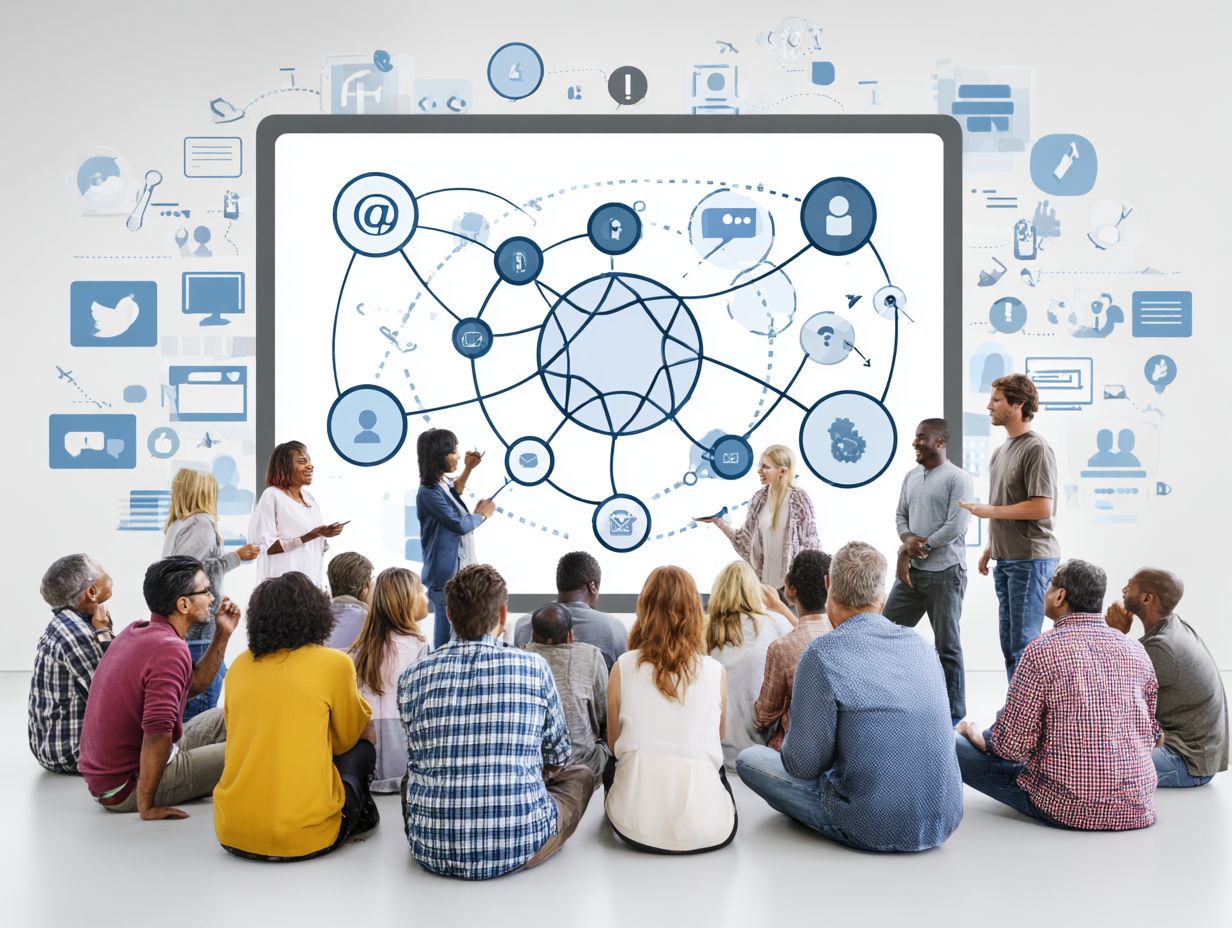
Scalability is definitely a big challenge for decentralized networks. When more users jump on board, it can really put a strain on the infrastructure, network effects, and mess with performance.
I remember when Ethereum hit some serious congestion during the 2020 DeFi boom. Transaction fees shot up, and confirmations got delayed, showcasing just how limited it can be.
The EOS network had its fair share of struggles too. As user interest surged, its infrastructure just couldn’t keep up, resulting in significant downtime and a noticeable drop in service quality.
To tackle these issues, I’ve found that implementing layer-2 solutions like Polygon can make a big difference in achieving scalability and enhancing user engagement. These tools help take some of the load off the main chain by processing transactions elsewhere, which really boosts throughput and enhances the user experience.
So, it’s clear to me that understanding and addressing these scalability challenges is essential for long-term adoption and overall performance.
Case Studies of Decentralized Platforms
When I take a look at real-world examples of decentralized platforms, I really get a sense of how they work, how users engage with them, and the dynamics within their virtual communities.
It’s fascinating to see the different ways these platforms operate and connect people.
Mastodon
Mastodon really stands out to me as a solid example of a successful decentralized social network fostering equitable access. It allows users to set up their own independent servers while also fostering a strong sense of community. Each server, or “instance,” runs on its own, which means they can establish their own community standards, moderation policies, and rules.
I love how users can jump in by sharing content, following others, and joining discussions that really resonate with their interests. To keep things in check, these servers use handy tools like Mastodon’s built-in reporting features and community guidelines, which actually enable users to uphold the values they share.
Plus, thanks to the ActivityPub protocol, it’s super easy to interact across different instances, creating this rich, interconnected experience promoting interoperability.
This whole setup not only boosts user engagement but also helps create a healthier online environment by spreading out the power over content ownership and moderation.
Diaspora
Diaspora gives me a great alternative to those centralized networks, really focusing on user autonomy and control over personal data with its federated networks model. I love how I can create accounts on different pods, which are basically independent servers all connected within the Diaspora network, enhancing trust models.
This setup makes sure I actually own my data since no single entity can control all my information.
What I appreciate even more are the community-driven features, like customizable privacy settings that really boost my trust in the platform and promote digital literacy. It’s super easy for me to tweak my visibility settings for posts and interactions, which gives me peace of mind.
This decentralized approach creates a lively community where everyone can get involved in developing and governing the platform, promoting user-centric design and making sure the experience is all about us users.
The Future of Free Speech in Digital Spaces
The future of free speech in digital spaces really depends on how technology advances, algorithmic regulation, and how regulatory frameworks evolve.
These factors will definitely shape how we interact online and promote digital activism.
Potential Developments
I see a really promising future for decentralized networks, especially with all the emerging technologies and shifts in society that prioritize user rights, algorithm transparency, and privacy. Innovations like blockchain technology and peer-to-peer protocols are really driving this change.
Just look at platforms like Mastodon and Diaspora; they use decentralization to give users more control over their personal data and digital identity.
With advancements in encryption, communication is becoming much more secure, which encourages us to express ourselves freely without worrying about censorship. As more people become aware of privacy issues, I think we’ll see a spike in engagement with these networks, leading to more diverse conversations and a culture of inclusivity.
It’s super important for all of us to take an active role in supporting these platforms if we want to boost their sustainability and ethical tech practices.
Role of Regulation
Regulation is going to be super important in figuring out how to keep decentralized networks sustainable while balancing user freedom with the oversight that we need. I think that if regulators want to navigate this landscape effectively, they should focus on creating frameworks that protect user interests without putting a damper on innovation and trustlessness.
For example, using concepts like “code as law” can help ensure that community-driven protocols stick to best practices. It’s also crucial to involve a mix of stakeholders-like users, developers, and civil rights organizations-so we can get a well-rounded view of the potential impacts on social justice.
Looking at case studies from places that have adopted flexible regulatory approaches, like Switzerland’s blockchain laws, can really help us understand how to craft effective strategies that prioritize both accountability and freedom of expression.
Frequently Asked Questions
How do decentralized social networks ensure true free speech?
Decentralized social networks use a peer-to-peer network structure, allowing for communication without a central authority controlling the content. This allows for true free speech as there is no single entity with the power to censor or restrict speech.
What are the benefits of using a decentralized social network for free speech?
Using a decentralized social network for free speech allows for greater privacy, security, and control over one’s own data. It also promotes open and diverse discussions as there is no centralized moderation.
Do decentralized social networks have any limitations when it comes to free speech?
While decentralized social networks offer greater freedom of speech, they are not immune to illegal or harmful speech. Users are still responsible for their own content and may face consequences for violating laws or community guidelines.
How do decentralized social networks handle controversial or offensive content?
Unlike centralized social networks, decentralized ones do not have a single entity with the power to remove or censor content. Instead, users can choose to block or mute content they find offensive, and communities may establish their own guidelines for what is acceptable within their network.
Are there any concerns about the reliability of decentralized social networks for free speech?
Some have expressed concern that decentralized social networks may become havens for hate speech or extremist views. However, with proper moderation and user self-regulation, these issues can be addressed without compromising free speech.
How can I get involved in promoting free speech on decentralized social networks?
You can join decentralized social networks that prioritize free speech and actively participate in discussions and debates about online reputation. You can also support and promote platforms that respect and prioritize true free speech.
Want to keep exploring the fight for free expression and digital rights? Visit the BertrandPancher.com home page for more in-depth articles, fresh perspectives, and resources on protecting free speech in the modern world.