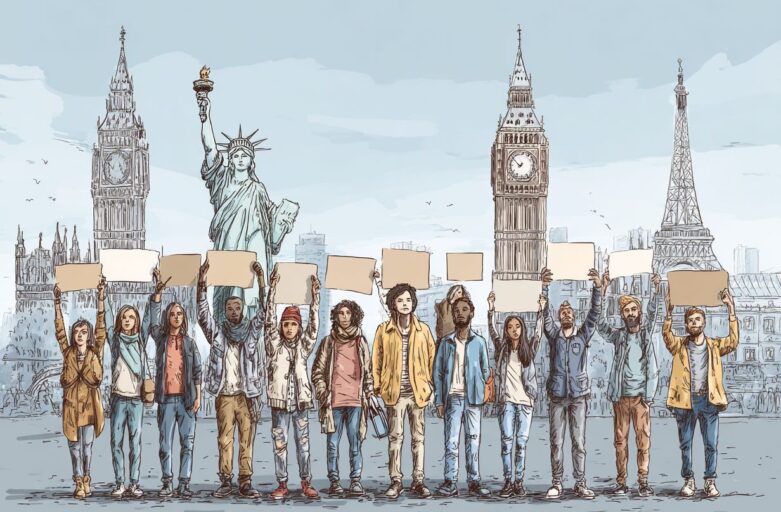
Ever feel like the right to speak freely, a cornerstone of civil liberties, is slipping through our fingers? It’s a reality many democracies, both established and emerging, are grappling with today. As countries navigate the delicate balance between regulation and personal expression, I can’t help but wonder how these challenges manifest worldwide. From the U.S. to India, each case tells a unique story of political repression, censorship, and governmental control. Let’s dive into the patterns, impacts, and the courageous voices standing up for freedom of speech, human rights, and digital rights across the globe.
Definition and Importance
Free speech, to me, is all about having the right to share my opinions without being silenced. It’s a fundamental part of a democratic society and a key aspect of human rights. It really helps in giving voice to those who might be in the minority, letting a variety of perspectives shine through.
Take countries like Canada and Germany, for example. They have laws against hate speech, but they also encourage lively debates on different topics, making sure even the unpopular opinions get a chance to be heard, thus fostering media pluralism and democratic values. On the flip side, the U.S. embraces a broader interpretation of free speech through the First Amendment, which really encourages progress by fostering open discussions and safeguarding constitutional rights.
This balance is crucial; it promotes innovation and understanding, allowing societies to grow and evolve by exploring new ideas without the fear of being shut down.
Historical Context
The history of free speech has really been a battleground, and I find it fascinating to see how different countries have shifted from repression to liberalization over time.
One of the key moments for me was the U.S. First Amendment in 1791, which really set the stage for rights around free expression. Then, in 1948, we had the Universal Declaration of Human Rights, which proclaimed the right to freedom of opinion and expression on a global scale.
Fast forward to the 1960s, and the civil rights movement truly energized these rights, pushing back against systemic censorship.
Nowadays, I see legal battles over digital speech showcasing how technology is reshaping and redefining free speech yet again. It’s crucial for me to stay informed about current debates, especially those swirling around social media platforms.
Global Overview of Free Speech Challenges
I see that free speech and freedom of expression are under constant threat all around the world, and it’s interesting to notice the common challenges that democracies and civil society seem to face.
Patterns keep emerging that really highlight just how tricky it can be to protect this fundamental right amidst ideological divides and political polarization.
Common Patterns and Trends
I’ve noticed some pretty concerning patterns when it comes to free speech challenges, like the rise of government surveillance and regulations aimed at silencing dissenting voices. In recent years, more than 30 countries have tightened their grip with stricter laws that limit public discourse and protests.
Take 2021, for example, when countries like Belarus and Russia rolled out legislation that effectively silenced opposition voices, all under the pretense of public safety.
It’s alarming to see reports from organizations like Freedom House highlighting a decline in overall freedom of expression. They indicate that a staggering 74% of the world’s population now lives in countries where media freedom is on the decline.
Tackling these issues really calls for global awareness and advocacy, and we need campaigns that promote digital rights and protect journalists.
Impact of Technology on Free Speech
Technology has really changed the game when it comes to free speech, giving us platforms to express ourselves while also providing tools for censorship.
I notice that social media giants like Facebook and Twitter are constantly moderating content to try to strike a balance between free expression, content moderation, and community standards.
For example, Facebook has its Community Standards that prohibit hate speech, which has led to a lot of content getting removed and accounts being suspended. Twitter is no different; they use some pretty advanced algorithms to identify and flag misinformation, especially during big events like elections and pandemics.
These moderation techniques show just how tricky it can be to maintain free speech in digital spaces. They often spark debates about whether these actions are fair and transparent, which keeps the conversation going.
Case Studies of Free Speech Crackdowns
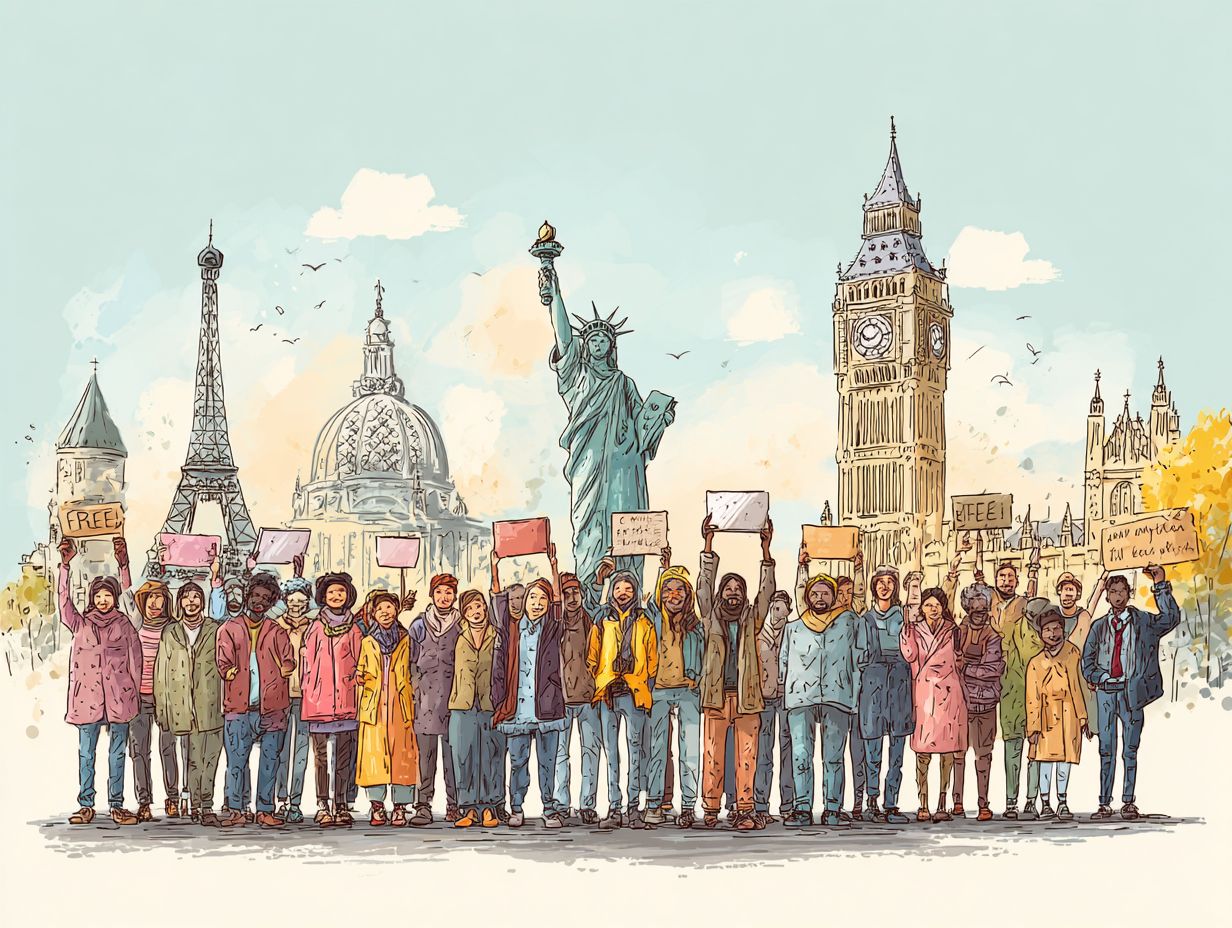
When I dive into specific case studies, I can see just how different democracies tackle free speech challenges, governmental control, and speech regulations in their own unique ways.
It’s really interesting to explore the various approaches and understand what works and what doesn’t.
United States: Recent Developments
In recent years, I’ve seen the United States really struggle with some serious free speech challenges, especially when it comes to political dissent and misinformation.
One of the big moments that stirred the pot was the 2021 Capitol riots. That event kicked off a whole debate about social media censorship, especially since platforms like Twitter and Facebook decided to suspend accounts, including former President Trump’s.
I’ve noticed that there have been some legislative moves, too. Various states are proposing bills aimed at tackling misinformation, and that’s led to some intense public discussions.
For instance, a few states have rolled out laws that push social media platforms to be more transparent about their content moderation practices.
The public’s reaction to all this is pretty divided. On one side, you’ve got advocates calling for stricter regulations to safeguard democracy. On the flip side, there are folks who are really concerned about potential overreach that might infringe on free expression. It’s a tricky situation for sure.
European Union: Balancing Regulation and Freedom
The European Union has this tricky job of trying to balance regulatory measures with the need to protect free speech, press freedom, and media regulation across all its member states. To tackle this challenge, the EU has rolled out directives like the Digital Services Act, which aims to combat hate speech without shutting down legitimate discussion.
For example, online platforms are required to act quickly to remove illegal content, but they also need to put measures in place to protect user rights. The EU is pushing member states to develop media literacy programs to help people spot misinformation.
Of course, there are still hurdles to overcome, like the different ways people interpret hate speech and the risk of going too far, which could end up censoring voices under the guise of regulation. So, it’s really important to find a balance that respects individual rights while still addressing these issues.
India: The Rise of Censorship
I can’t help but notice that India’s recent trend toward censorship and authoritarianism is raising some serious alarms about our free speech rights, especially with all the political pressures swirling around. Just look at what happened with the government’s ban on those BBC documentaries about Kashmir and the strict rules they’ve imposed on social media platforms like Twitter and Facebook, forcing them to take down any content they consider inappropriate.
It’s no surprise that public backlash is heating up, with protests and social media campaigns popping up everywhere, demanding transparency and accountability. This really brings to light the tension between state control and individual freedoms.
I can’t shake the feeling that this kind of censorship could stifle dissent and undermine journalistic integrity in a country that prides itself on being the world’s largest democracy.
Comparative Analysis of Legal Frameworks
When I look at the different legal frameworks, it’s interesting to see how various democracies tackle the issue of protecting free speech, judicial independence, and political transparency.
Each one has its own unique approach, and it really highlights the diversity in how countries value and safeguard this crucial right.
Constitutional Protections
Constitutional protections for free speech really run the gamut depending on where you are. Some countries have strong rights firmly in place, while others are all about imposing harsh restrictions.
Take the United States, for instance. The First Amendment is pretty clear-it stops Congress from making any laws that mess with freedom of speech. And there’s a ton of Supreme Court rulings backing this up, interpreting the right quite broadly.
Now, flip the script to a place like Turkey, where the rules are a lot tighter. They have laws that can criminalize insults to the state and its leaders, which often leads to a whole lot of censorship. Then there’s Germany, which tries to strike a balance by allowing free speech but also putting limits on hate speech, a move shaped by their historical context.
To really get a handle on these differences, it’s important to look at each nation’s legal framework, international law, and the socio-political environment. That’s where you start to see the complexities of free expression around the world.
Legislative Responses to Free Speech
In terms of legislative responses to free speech challenges, I can see the ongoing tug-of-war between protecting citizens and regulating harmful speech. Take Germany’s NetzDG law from 2021, for example. It slapped strict penalties on social media platforms for not removing hate speech, showing just how serious they are about tackling online extremism.
On the flip side, Canada is diving into the conversation with their recent C-10 legislation, which aims to harmonize content regulation. But this has sparked debates about potential censorship, and I can totally see why people are concerned.
Then there’s the U.S., where discussions about reforming Section 230 and addressing online censorship are underway. It’s a tricky balancing act between giving platforms immunity, ensuring freedom of information, and holding them accountable.
All these examples really highlight how different democracies are trying to navigate the free speech landscape, considering global comparisons, while working to keep civil discourse alive and protect vulnerable communities.
Role of Civil Society and Activism
I really believe that civil society and activism are super important when it comes to defending free speech, promoting social justice, and standing up to oppressive regimes around the world.
Grassroots Movements
Grassroots movements really get communities together to advocate for free speech and promote freedom of assembly, showing just how powerful collective action can be in democratic societies.
Take the American Civil Liberties Union (ACLU) as a prime example-they’ve been on the front lines, using public campaigns, legal challenges, and litigation to protect our free speech rights. Through their educational programs, they enable folks like me to understand our constitutional rights, and their grassroots initiatives, like local town hall meetings, foster civic engagement and really encourage community dialogue.
Then there’s Defend Free Speech, which brings activists together for rallies, online activism, and social media campaigns, shining a light on censorship issues. These movements do a fantastic job of using both traditional outreach and digital platforms, leading to real results like policy changes, digital activism, and endorsements from influential figures.
It’s amazing to see how much can be accomplished when people come together for a common cause, demonstrating the power of social movements.
International Organizations and Advocacy
International organizations are super important when it comes to advocating for free speech, addressing global governance challenges, keeping an eye on abuses, and offering support to those who need it.
Take Amnesty International and Human Rights Watch, for example. They use a bunch of different methods to defend free speech and uphold civic rights around the world. They dig deep into research to document human rights abuses, contributing to discourse analysis, and then release reports that shine a spotlight on these issues.
I find it fascinating how Amnesty’s annual report highlights specific cases of people who have been imprisoned just for speaking out, and they really push for governments to set them free. Human Rights Watch does something similar by conducting interviews, gathering firsthand accounts, and promoting whistleblower protections to help build legal cases.
Their advocacy is often a game-changer, creating public pressure that can lead to real policy changes, government accountability, and even the release of political prisoners. It’s inspiring to see the impact they can have!
Frequently Asked Questions
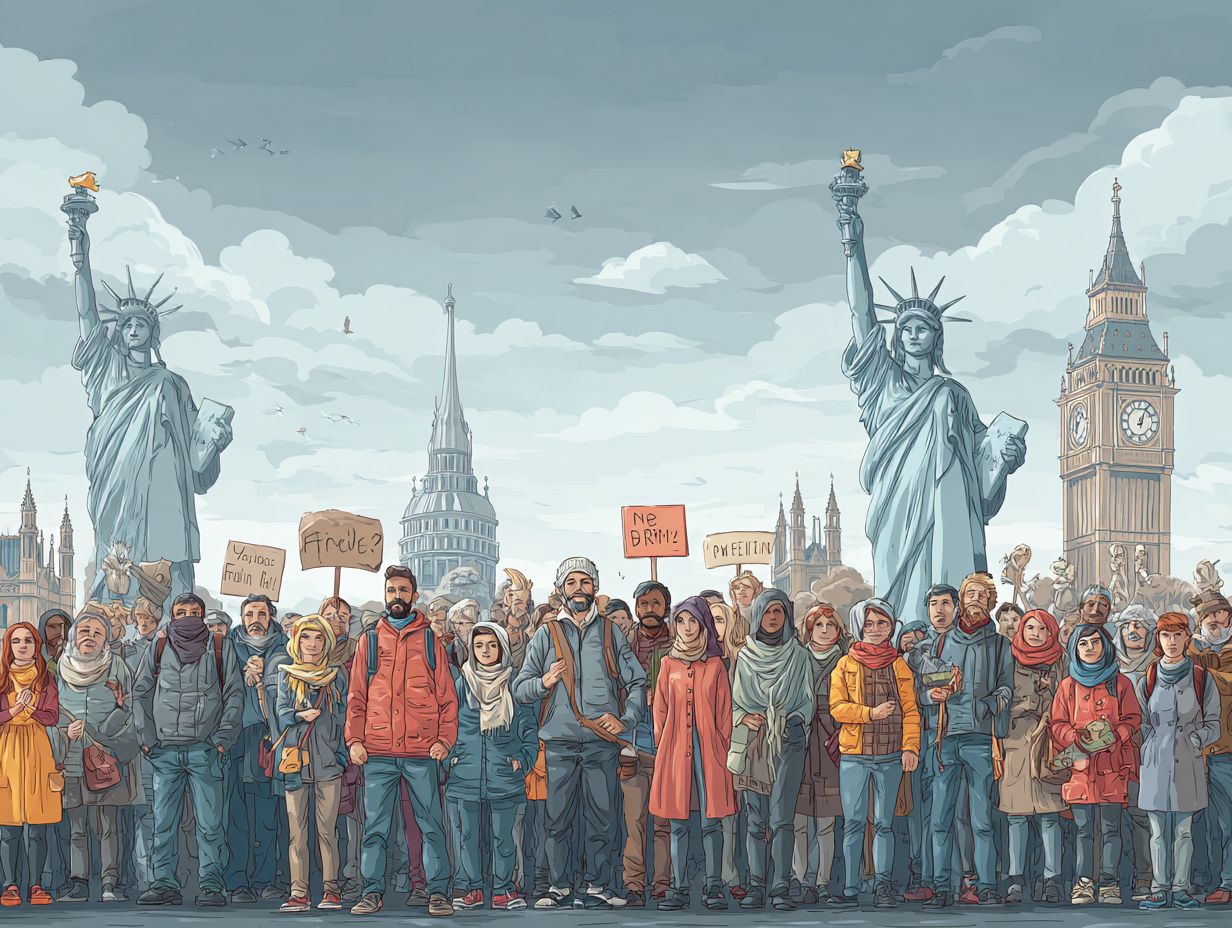
What are global crackdowns on free speech?
Global crackdowns on free speech refer to the increasing trend of governments and authorities around the world limiting or censoring people’s ability to express themselves freely, either through laws, regulations, or other means of control.
How do these crackdowns impact democracy?
These crackdowns can have a significant impact on democracy as they restrict people’s ability to voice their opinions and participate in the democratic process, ultimately limiting the diversity of perspectives and ideas within a society.
What are some examples of countries with recent crackdowns on free speech?
Some countries that have faced criticism for their crackdowns on free speech include China, Russia, Turkey, and several Middle Eastern countries. However, democratic nations such as the United States and members of the European Union have also faced challenges in protecting free speech rights amidst evolving social media policies.
How do these crackdowns differ between democracies?
The methods and extent of these crackdowns can vary between democracies, with some countries implementing more subtle forms of censorship and algorithmic bias, while others have more overt restrictions on free speech. Additionally, the reasons for these crackdowns can also differ, ranging from national security concerns to political suppression influenced by the political climate.
What are the potential consequences of global crackdowns on free speech?
Besides limiting democratic values, global crackdowns on free speech can also lead to a lack of transparency and accountability in government, as well as hindering the progress of innovation and creativity. It can also contribute to the spread of misinformation, ideological extremism, and intolerance within society.
Can anything be done to address these challenges?
There are efforts being made by international organizations, such as the United Nations, to address and combat global crackdowns on free speech. Additionally, individuals and advocacy groups can also work towards raising awareness, challenging speech limitations, and advocating for the protection of free speech rights in their respective countries.
Want to keep exploring the fight for free expression and digital rights? Visit the BertrandPancher.com home page for more in-depth articles, fresh perspectives, and resources on protecting free speech in the modern world.